Today’s Tuesday Reading is from Tim Schengrund, Associate Director at Princeton University and a MOR program alum. Tim may be reached at [email protected] or via LinkedIn.
Another Leadership Program
Throughout my years as a leader, I’ve always been eager to learn as much as possible to become a better version of a leader. During those years, I can’t begin to tell you how many countless leadership programs I’ve attended, tactics I’ve become skilled doing (lead/manage/do, influence, leading change, etc.), and countless writings I’ve read about leadership. So when I was asked if I would be interested in attending the MOR Leaders program, I was eager to attend but also wondered what would be different about this program.
Déjà Vu
As the first workshop, The Evolving Leader, began and I read through the topics for the upcoming days, déjà vu kicked in. This was going to be a long three days if the plan was to read through the agenda topics, philosophically discuss how to become a better delegator, establish my brand, interpret my feelings to determine whether I’m an imposter, and fill out worksheets to create habits. Leaders need to do a million things, and being away the next three days was just going to add to that list.
But as the session took shape some unique things started to stand out about the program. Each of the MOR coaches exhibited passion about leadership and all it takes to be a successful leader. It was easy to see their commitment to the program and their commitment to each person in the room. I also realized that they were intentionally beginning the process of helping the group build relationships that would be invaluable as we support each other on our leadership journeys as we progress into the future. This program wasn’t my typical experience in a leadership class, where we talked theory, shared a few stories, and concluded without establishing new relationships or skills.
Back to Basics
Then along came the second workshop. As I looked through each of the pages of the MOR binder, I was reminded that, even though for many years I’ve strategized, led change, approached work tactically, and executed well, there are always undoubtedly more things to learn by simply going back to the basics and understanding the elements behind each of these skills. Each topic in the MOR binder detailed key concepts for understanding change, how it is applied across the three lenses, finding your supportive stakeholders, understanding the sources of power, and tying these ideas into a cohesive map for leading successful change. I began to appreciate the fact that the binder wasn’t just a binder, but rather a MOR Leader’s Tool Kit that one must revisit on a frequent basis to rejuvenate the basics, which sometimes become forgotten over time.
Buzzwords
At workshop three, the first concept of Emotional Intelligence (EQ) was covered. In my mind, this was an “HR buzzword” I’ve heard for years, and here it is again. But as we broke out into sessions to discuss aspects of EQ, I began to realize that EQ wasn’t about the Emotional Intelligence of those around me, but rather about my own EQ. I found the distillation of the four skill sets of Self Awareness, Social Awareness, Self-Management, and Relationship Management to be thought-provoking and highly applicable in everything I do and don’t do as a leader. I was even more intrigued by the idea that EQ can actually be developed (after all, it is a skill set) and decided to list EQ as one of my development goals for the upcoming year. Once again, the MOR Leader’s Tool Kit (binder) did a terrific job of breaking down and accentuating one of the most important basics of leadership skills.
Inspirations
Workshop four presented many concepts I’m extremely familiar with to help with talent recruitment, development, performance, goals, and retention. One advantage of working in Human Resource technology is that my role is to understand and implement tools that support HR concepts and functions for leaders, which gives me a deep understanding of these concepts and their uses. One simple statement by a colleague during the workshop stood out: “job descriptions create guardrails and limits, I don’t care about my job description.” This statement hit home and made me reflect at that moment, have I been coaching my teams all these years toward performance or potential? Although I came to this realization, the point isn’t about performance vs. potential; it’s that the MOR Leaders program intentionally inspires reflection and thinking about ways to improve our leadership journeys.
The Day After Graduation
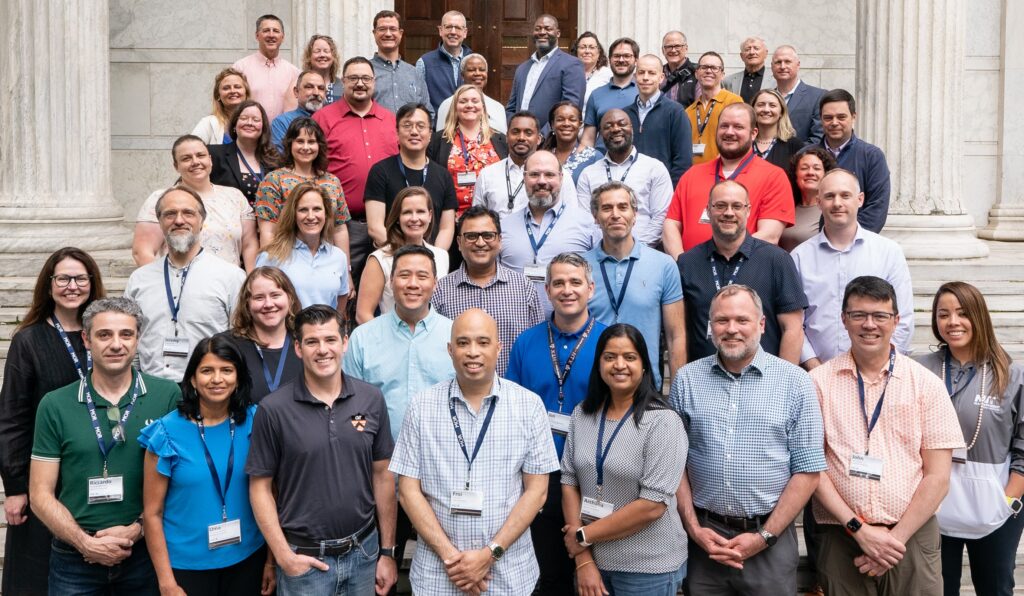
Graduation day felt like a whirlwind, packed with sessions, speakers, guests, presentations, and travel home. I just opened my graduation certificate for another quick look. My original thought when entering the MOR program of “what would be different about this program” was profoundly clear as I glanced at each person’s smile in the picture and reflected on the workshop and my interactions with each person. Not only did we build a community, we cultivated lasting relationships and friendships.
Which is most important to you in your continued growth as a leader?
Last week we asked which emotion best reflects your experience of major change:
- 30% said grounded
- 21% said hopeful
- 26% said anxious
- 18% said frustrated
- 5% said something else

We are collectively split in how we are experiencing major change. Slightly over half feeling grounded or hopeful suggests change efforts that are understood and that we feel capable of navigating. Anxiety can suggest uncertainty around outcomes, expectations, or needed resources. Frustration can suggest perceived barriers such as unclear decisions, slow progress, lack of alignment, or change fatigue. How can you use your leadership tool kit to reduce that anxiety or frustration in yourself or others?