Today’s Tuesday Reading is from Rochelle Matthies, Assistant Vice Chancellor, IT Service Delivery & Organizational Strategy at the University of Colorado Boulder. Rochelle may be reached at [email protected] or via LinkedIn.
Breaking Tennis to Improve It
This story begins with high school sports. I was on the tennis team in high school and everything I knew was self-taught, including a serve I was proud of. It was fast and effective enough to help me win, but it was my own developed technique and not especially consistent or efficient.
My junior year, a new coach saw potential in me and offered extra lessons. The first thing he did was teach me how to serve the “right way.” To do that, I had to break what I thought was one of my greatest strengths.
I hated it. I was in the “Neutral Zone,” as Bridges calls it, bad at something I knew I could still do effectively if I just went back to the old way. But I stayed with it. Eventually, the new technique clicked. By my senior year, my serve was once again one of my greatest strengths, only better. My doubles partner and I went on to win the regional championship and compete at state. My performance at state is another story for another time and definitely another lesson learned.
I think about that experience a lot. We get comfortable with the way we do things because it works. After all, it’s what got us here. But as we talked about throughout MOR, what got us here won’t necessarily get us there.
Breaking Leading to Improve It
When I entered MOR, I was pretty confident. I’d been through several leadership programs and was well into a master’s program in Organizational Leadership. The concepts weren’t exactly new. What was different was being challenged to actually practice them.
I knew I should prioritize what mattered and get up on the balcony to think strategically. But was I doing that consistently? Not really. I winged it, rolled with the urgent, made just-in-time plans, and let my calendar fill with ten meetings a day. I was good in a crisis, quick on my feet, and flexible. Those strengths had served me well, but they had also become habits I relied on too much.
MOR made me question my ways and ask, who was I if I wasn’t always available? Was being busy the same thing as being effective? In the past year, I’ve had to recognize that some of the habits and strengths that made me successful could also hold me back if I never challenged them.
The strategic work I need to do is harder to define and easier to put off. It requires discipline to decide what matters, protect the time to do it, and let go of work that does not need to be mine.
So, much like my tennis serve, I’ve had to break the way I work and it hasn’t been easy. It requires practice.
Being Intentional
I have had to become more intentional with my time and priorities, clearer about outcomes, and more willing to create room for others to step up. I’ve also moved further from constant flexibility toward more structure. Flexibility is still one of my strengths, but I’ve learned that too much of it can become a substitute for prioritization and discipline.
I’m still me. I’m still flexible, responsive, and good on my feet. But I’m learning to pair those strengths with greater intention, structure, and discipline. Sometimes growth means being willing to break what has always worked.

Which lesson from today’s reading do you feel is most actionable for you?
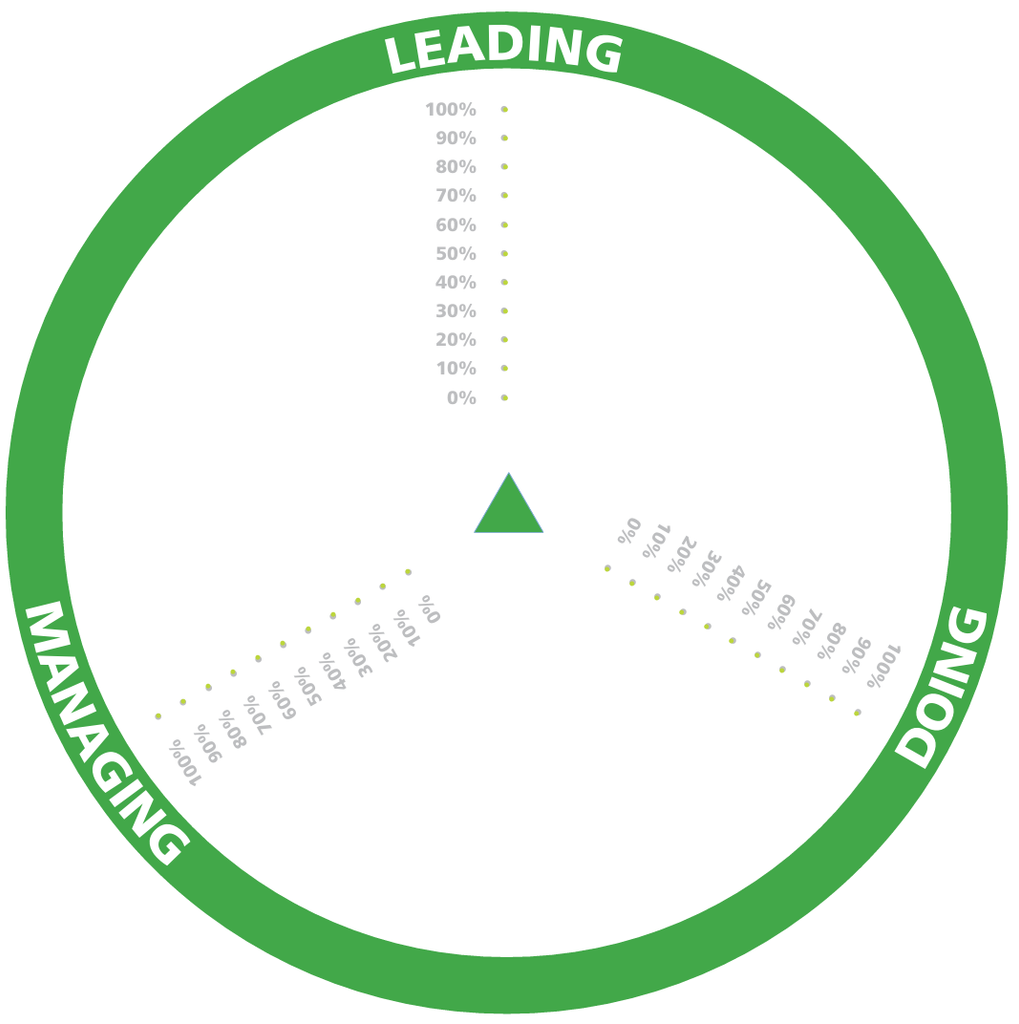
Last week, we asked how you will shift your leading, managing, doing balance?
- 6% said identify your top 3 priorities
- 4% said prioritize your time with defensive calendaring
- 4% said use delegation to focus on leading
- 5% said develop and coach team
- 81% said something else
A key to the success of growing in our leadership journey is making it our own. We clearly did that with last week’s reading as we considered the work of balancing our leading, managing, and doing, and taking the steps to make it our own.